
How do you apply for a CE marking for your product?
 Lars HurkmansCo-founder5 July 2023Reading time 5 minutes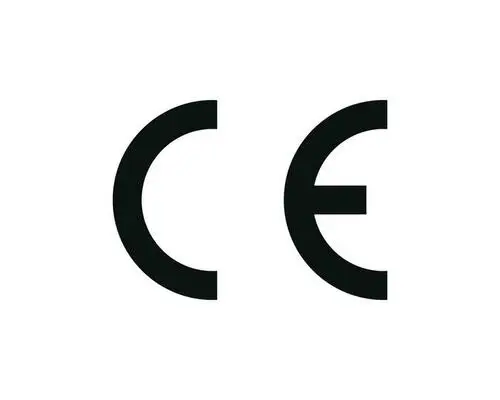
You don't apply for a CE marking with an authority: as the manufacturer or importer you declare yourself that your product meets the applicable EU directives. You do that in six steps: determine the directives and standards, check the requirements, test the product, draw up a technical file, affix the CE logo and sign an EU declaration of conformity.
What is a CE marking?
The CE marking is a certification mark that indicates a product meets the health, safety and environmental standards of the European Economic Area (EEA). It's a kind of passport that gives a product access to the entire EEA market, which consists of all EU member states plus Norway, Iceland and Liechtenstein.
Why does the CE marking matter?
The CE marking matters because it indicates that the product meets the essential requirements of the relevant European health, safety and environmental protection legislation. It shows that the product meets those legal minimum requirements, and gives consumers the confidence that it's safe to use.
Which products need a CE marking?
The CE marking is required for products that fall under the European Commission's so-called New Approach directives (mandatory CE marking, Ondernemersplein). This covers a wide range of products, including:
- Toys
- Medical devices
- Active implantable medical devices
- In vitro diagnostics
- Machinery
- Personal protective equipment
- Electrical equipment designed for use within certain voltage limits
- Mobile phones
- Computers
- Household appliances
Who is responsible: manufacturer, importer or distributor?
The manufacturer or their authorised representative designated in the EEA is primarily responsible for the CE marking. They must ensure that their products meet the requirements of all applicable directives. They carry out a conformity assessment and, if the directive requires it, involve a 'notified body'. They also keep a technical file for their products and show this on request to the market authorities of the EEA country where the products are traded. In a declaration of conformity, the manufacturer declares that their products meet all applicable directives. The manufacturer affixes the CE mark to the product.
If the products come from outside the EEA and the manufacturer has no authorised representative in the EEA, the importer must check whether the manufacturer has taken all the required steps. The importer must agree with the manufacturer that they hand over the technical file if a market authority asks for it. If you source yourself from a foreign supplier, you can read in sourcing from China for bol how to secure that documentation in time.
The distributor must have sufficient knowledge of the legal product requirements and know for which products a CE marking is required. They must also be able to recognise products that clearly don't meet the requirements. On top of that, they must have a declaration from the manufacturer or importer that the products meet all requirements.
What does the CE marking process look like?
The CE marking process can be broken down into six steps (CE marking step-by-step plan, RVO):
- Determine which EU directives and harmonised standards apply to your product.
- Check the specific requirements that apply to your product.
- Determine whether the conformity of your product needs to be assessed by a 'notified body'.
- Test your product and check whether it meets EU legislation.
- Draw up technical documentation and keep it available for market surveillance authorities.
- Affix the CE marking to your product and draw up an EU declaration of conformity.
What does a CE marking cost?
The costs of applying for a CE marking vary with the complexity of the product and the specific requirements that apply. They cover not only the tests and the certification, but also the time and resources needed to bring the product into compliance with all requirements. The costs can range from a few hundred to thousands of euros.
How does CE certification work on bol and Amazon?
As online marketplaces, bol and Amazon require that all products sold on their platforms comply with the applicable laws and regulations, including the CE marking for products that fall under the relevant EU directives. Sellers are themselves responsible for the compliance of their products and can be removed from the platform if they don't comply (CE marking assortment policy, bol partner platform). If you want to know in advance whether you're even allowed to offer a product commercially, take a look at the product rules for selling on bol.
How do you affix the CE logo to your product?
The CE logo must be visible, legible and indelible. It must be affixed to the product itself or, if that's not possible, to the packaging or in the accompanying documents. The logo has a minimum size of 5 mm, unless the applicable directive states otherwise, and it must meet the graphic requirements from EU legislation. Note that there's a strongly resembling China Export logo that isn't a CE marking; we explain the difference in CE certificate on Alibaba.
What's the difference between a CE certificate and a declaration of conformity?
A CE certificate and a declaration of conformity aren't the same, and that confusion happens often. When manufacturers claim to have a 'CE certificate', they often mean a test report such as an EMC or LVD report. Such reports are only one part of the technical documents that come from the conformity assessment (step four) and belong in the technical file (step five).
On top of that, there's a group that incorrectly labels the declaration of conformity as a CE certificate. That's an incorrect term. Remember that the declaration of conformity must always be signed by the person placing the product on the European market. Why you're better off asking your supplier for the test report rather than a certificate is covered in CE certification on bol.
Conclusion
The CE marking is an essential part of safeguarding the safety and quality of products within the EEA. The process can be complex, but it's the foundation for legally offering your product on the EEA market and for building consumer trust. Both for the toy manufacturer bringing a new product to market and for the consumer who sees a device without a CE mark on Amazon, it pays to understand what the CE marking means and why it matters.